


Show Notes
Discover what’s possible when diagnosis opens doors.
What are considered the “gold standard” tools for diagnosing autism?
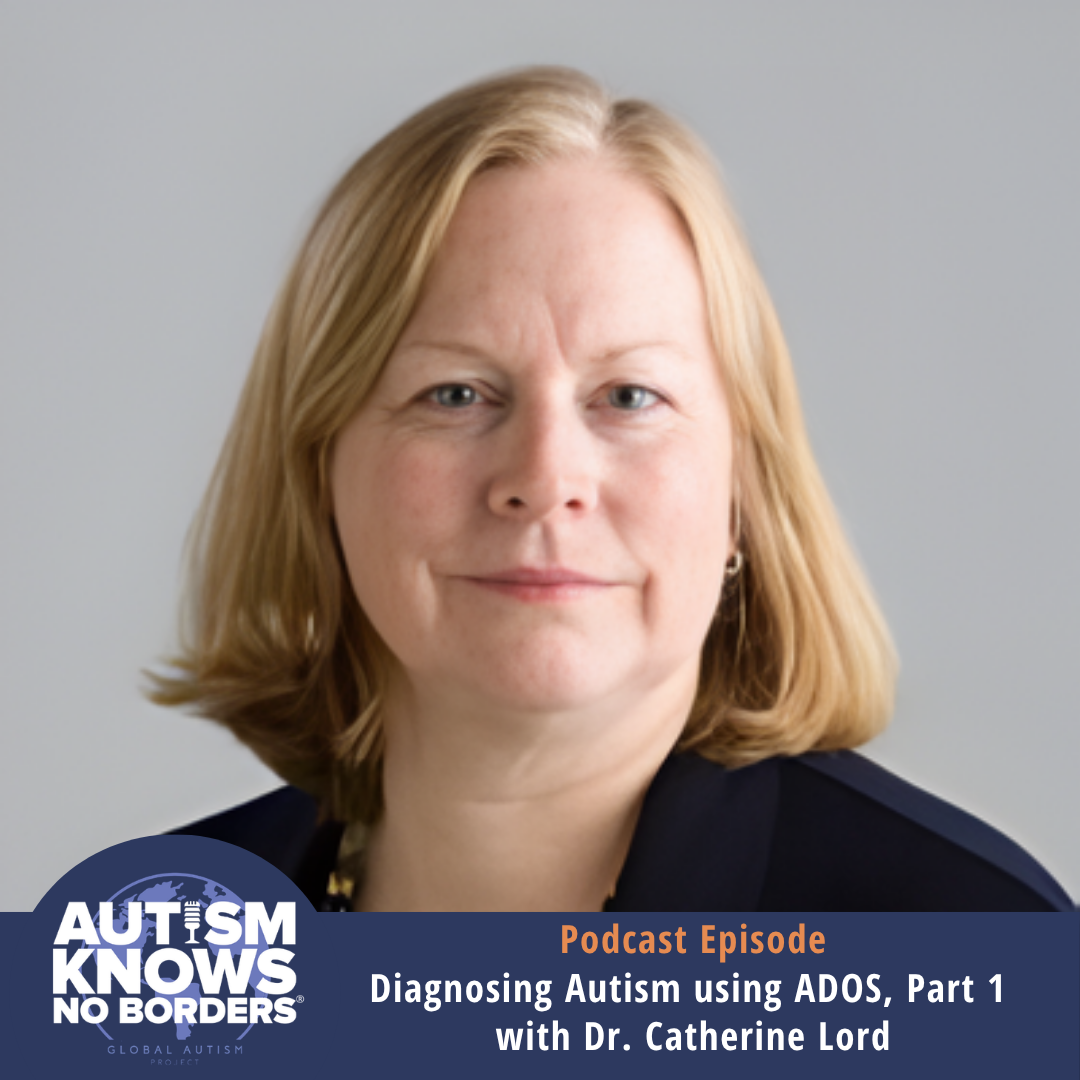
If you’re curious about the history of autism diagnoses and observational assessments, you’ll want to listen to this episode with Dr. Catherine Lord.
Dr. Lord is an American psychologist and researcher. She currently serves as a member of the International Advisory Board for The Lance Psychiatry, co-chair of the Scientific Research Council of the Child Mind Institute, and the George Tarjan Distinguished Professor of Psychiatry and Education at UCLA’s Semel Institute for Neuroscience and Human Behavior.
Credited for co-developing the Autism Diagnostic Observation Schedule (ADOS) and the Autism Diagnostic Interview-Revised (ADI-R), Dr. Lord is also known for leading one of the largest and longest-running longitudinal studies of autism in modern research, which began in 1990 and continues to follow a community sample of over 200 individuals.
Dr. Lord has authored numerous books about autism and hundreds of peer-reviewed journal articles, as well as received a considerable number of awards and professional recognitions.
This episode is part one of our conversation, and we discuss:
- Shortcomings of early autism diagnosis
- Why autism was so hard to diagnose consistently
- How the ADOS assessment tool was developed
- What it actually does and does not measure
- Common misunderstandings of the ADOS
- Why a diagnosis involves more than a single test
- Training and cultural considerations for professionals who administer the ADOS
- The evolution of autism categories in the DSM (Diagnostic and Statistical Manual of Mental Disorders) and why these changes matter
- How families can explain an autism diagnosis to their child
- Early detection in infants
- Misconceptions about regressive autism
- Self-diagnosis and access to autism assessments
To learn more about Dr. Catherine Lord and her work, please visit: Dr. Catherine Lord UCLA Profile
----more----
We appreciate your time. If you enjoy this podcast and you’d like to support our mission, please take just a few seconds to share it with one person who you think will find value in it too.
Follow us on Instagram: @autismpodcast
Join our community on Mighty Networks: Global Autism Community
Subscribe to our YouTube channel: Global Autism Project
We would love to hear your feedback about the show. Please fill out this short survey to let us know your thoughts: Listener Survey
Listen On
Recent Episodes
-

TITLE: SkillCorps | Autism Services in Italy
Discover what’s possible when parents connect. These next two episodes will high -

A Mother’s Story in China, with Jie Bing Zhang | Autism Tips & Tools
How does a mother’s love inspire her to keep searching for the quality autism se -

Autism Services for Adults in the US, Part 2 with Cammie McGovern
Discover what’s possible when success is measured in belonging. What does good p -

What Is The Disability Cliff? Part 1 with Cammie McGovern
Discover what’s possible when success is measured in belonging. What happens to